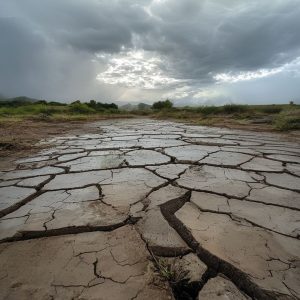
 Changes in water scarcity that previously seemed temporary or transitory are becoming permanent and irreversible. An important report notes this, but also proposes possible solutions.
“The world has entered a new phase: more and more watersheds and aquifers are losing their ability to return to normal. Droughts, water shortages, and pollution incidents that seemed to be temporary shocks are becoming permanent in many places,” warns a new United Nations report. The report calls this crisis a “water bankruptcy.”
According to the report, the world is facing an irreversible depletion of water reserves. Indeed, humanity has been overconsuming water for decades and the reserves of lakes, rivers, glaciers, and wetlands are dwindling, which is already being felt by billions of people. Another serious factor is the pollution of these reservoirs.
The analysis shows that nearly three-quarters of the world’s population live in countries that fall into the “water shortage” or “critical water shortage” categories. In addition, four billion people face severe water shortages for at least one month of the year.
The luxury of water
“In many regions, people are living beyond their hydrological means, and many essential water systems are already completely depleted,” said the study’s lead author, Kave Madani. “By recognizing the reality of unsustainable water use, we can finally make the difficult choices that will protect people, economies, and ecosystems,” added the director of the United Nations University Institute for Water, Environment, and Health (UNU-INWEH).
Three billion people and more than half of the world’s food production are concentrated in regions already facing unstable or declining water supplies. Soil salinity has also increased, which scientists say has already degraded more than 100 million hectares of arable land.
Mold, drought, pests. Climate change threatens coffee cultivation in Kenya
More than 170 million hectares of arable land are exposed to “high” or “very high” water scarcity. The economic damage caused by soil degradation, groundwater depletion, and climate change exceeds $300 billion (€6.2 trillion) per year globally.
New world of water
The researchers wrote that the current approach to solving water-related problems is no longer appropriate and that the priority is not a return to normal, but a new global water agenda designed to at least minimize damage.
The report emphasizes the need for a fundamental shift in the global water agenda, moving away from repeated emergency responses to what the authors call “bankruptcy management.” According to them, this means countering overexploitation with transparent water accounting, enforceable limits, and protection of water-related natural capital. All natural and man-made elements of the landscape that produce and store water—aquifers, wetlands, soils, rivers, and glaciers—should be much better protected. At the same time, these measures must be geared toward equitable distribution and protect vulnerable communities and their livelihoods.
Rapid drought is a hidden threat to European nature
Jonathan Paul, a geologist at Royal Holloway, University of London, said the report failed to address one of the main drivers of the crisis. “The fundamental issue, which is mentioned only once in the report, is the influence of massive population growth on most manifestations of water bankruptcy,” Paul said.
The crisis offers opportunities
The report views water not only as a growing source of risk, but also as a strategic opportunity in a fragmented world. It argues that significant investments in water can lead to progress on climate, biodiversity, soil, food, and health, and can therefore serve as a practical platform for cooperation within and between societies. Acting early, before water stress turns into irreversible loss, can reduce shared risks, build resilience, and restore trust between peoples and nations through tangible results.